0 Sản phẩm
Không có sản phẩm trong giỏ hàng.
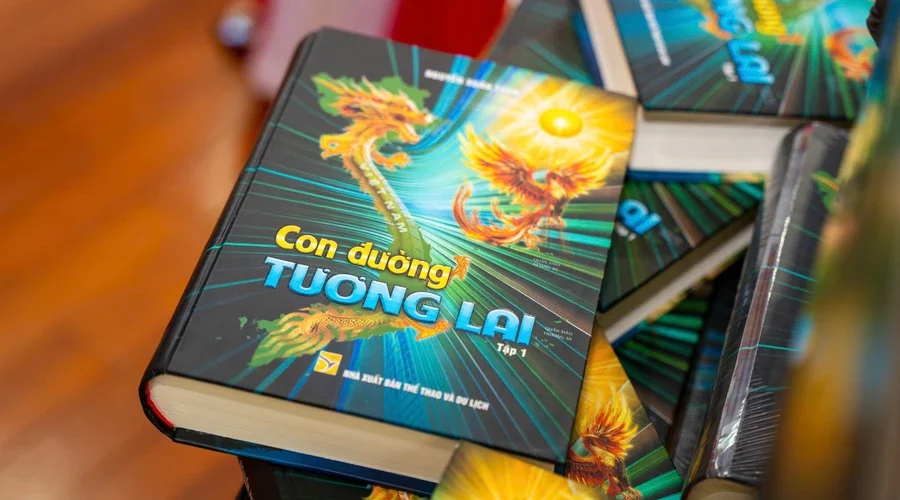

The Path to the Future (Con duong tuong lai)
The Path to the Future — Vietnam’s vision for a humane, sustainable digital civilization
Seeking the true meaning of progress
In an age when technology advances faster than ethics, the world stands at a crossroads. Artificial intelligence, digital capitalism, and global competition are reshaping human life at unprecedented speed. Amid this accelerating churn, a profound question resounds: What, in fact, counts as progress?
From Vietnam, a new philosophical voice rises—bridging East and West, reason and compassion. In The Path to the Future, author Nguyen Xuan Tuan invites readers to reconsider the foundations of modern civilization and the “moral compass” required to guide it.
The Four hands theory in The Path to the Future
At the heart of Nguyen Xuan Tuan’s thought is what he calls the Four hands theory—a new way of seeing how society operates, not only in economics, but also in politics, culture, and human life.
The first invisible hand is the market—a symbol of freedom, creativity, and humanity’s capacity for self-organization. It reflects the natural laws of exchange and competition, where people seek benefit through innovation and efficiency. Yet without the light of ethics, this hand can easily turn into greed and egotism.
The second invisible hand is human conscience—the spiritual hand that cannot be seen but is present in our awareness, beliefs, and moral values. It is the “invisible” dimension of social ethics, shaping behavior in the absence of law, prompting people to stop before wrongdoing, and awakening responsibility, compassion, and forbearance.
The first visible hand is the State—the embodiment of law, governance, and social order. The State plays a formative and coordinating role, using law to protect fairness, maintain stability, and orient development. But without the oversight of the community and an ethical spirit, this hand can become an instrument of authoritarian power.
The second visible hand is the social community—the embodiment of benevolence, solidarity, and collective moral responsibility. It is the hand of the people, of civil society, of cultural values and tradition—the place where moral reason is preserved and transmitted. If the State is the hand of regulation, the community is the heart that nourishes society with humaneness.
A sustainable civilization needs all four hands, just as a person needs two hands; to have only one is to be impaired. The two invisible hands—market and conscience—help build freedom and humanity. The two visible hands—State and community—safeguard order and compassion. These four hands do not act in isolation; they interweave, complement, check, and balance one another, forming an integral ethical–political–economic–cultural cycle. This is the foundation of the Path to the Future theory—aiming for a society that is free yet disciplined, advancing yet humane.
Tuấn argues that a sustainable civilization cannot rely on just one hand. A market without ethics breeds greed; a State without compassion leads to oppression; and a community without responsibility descends into chaos. “An invisible hand, if it is not clean, cannot wash itself—it takes two visible hands working together to restore purity.” Through this image—poetic yet pragmatic—he redefines development as a moral process, not merely an economic one.
Lessons from Vietnam
Vietnam’s transformation since the Doi Moi reforms of 1986 is vivid evidence of this balance at work.
From a war-torn, impoverished nation, Vietnam has emerged as one of Asia’s most dynamic economies—thanks to pragmatism, discipline, and a strong communal spirit.
In that journey, Nguyen Xuan Tuan discerns the seed of a new civilizational model—where material growth walks alongside moral awakening; where economic reform goes hand in hand with a revival of national spirit; and where the strength of the Vietnamese people is expressed through perseverance, solidarity, and creativity.
For him, The Path to the Future is not only a work of philosophy, but also a mirror of the nation—reflecting Vietnam’s spiritual and intellectual journey toward modernization.
From a global perspective, Vietnam’s model and The Path to the Future theory can offer a valuable reference for developing countries seeking balance between economic growth and social progress, between technology and ethics, and between global integration and national identity.
Vietnam shows that a small nation can achieve great stature if it can harmonize the invisible hand of the market, the visible hand of the State, the communal hand of society, and—most crucially—the invisible hand of human conscience.
This is a lesson in mindful development, a path that humanity can learn together as we move toward a shared future.
An intellectual dialogue between Vietnam and the World
The English edition of The Path to the Future, translated by Peterson Jesse David, opens a bridge of dialogue between Vietnam and the global intellectual community.
The work calls for a new Enlightenment—one centered not on machines and data, but on wisdom, empathy, and balance.
The Path to the Future is a distinctive, pioneering book—bringing Vietnamese thought to the world in a modern philosophical register while retaining a deeply Asian character. Beyond economics, it engages the most fundamental human questions: What is progress? What is civilization? Where are we headed in the digital age? It marks a turning point in modern Vietnamese thought—where Vietnamese intellect not only looks inward to reform the nation, but also looks outward to converse with the world, contributing to global philosophy a Vietnamese perspective—humane, awakened, and full of hope.
Tuấn’s ideas transcend Vietnam’s borders. They speak to all who seek meaning in a world flooded with speed, information, and ambition. They remind us that the future cannot merely be built—it must also be understood and deserved.
A call for enlightenment in the digital age—Toward a digital civilization and alliance economy
From The Path to the Future—with many forecasts for Vietnam and the world since borne out, and with several theories realized in practice—Tuấn advances a concrete vision: the Digital cooperative federation—a socio-economic network empowering millions of small businesses, household enterprises, and cooperatives through digital platforms. This model combines the logic of markets with the ethics of community, grounded in data transparency, technology, and collective ownership.
In doing so, he revives an ancient Vietnamese principle—“shared prosperity through mutual aid”—in a modern digital form. Tuan envisions a future in which technology connects rather than divides; in which artificial intelligence serves human intelligence; and in which technical progress moves in step with moral progress.
From Confucius to Adam Smith, from rice fields to virtual worlds, humanity’s greatest challenge remains the same: how to reconcile freedom with virtue, innovation with compassion, and ambition with conscience. Vietnam’s story—and Tuấn’s philosophy—suggests that the answer lies not in domination, but in harmony.
The Path to the Future is not merely a book; it is an invitation to redefine civilization itself—to find the human being again within our very notion of progress.

Nguyen Xuan Tuan
Nguyen Xuan Tuan is a writer and researcher, and the Chair of the Governing Council at the Institute of Educational and Environmental Sciences (IEES). He is the founder of the Digital cooperative federation – Alliance economy, a nationwide initiative connecting thousands of cooperatives and enterprises across Vietnam.
He has authored numerous works on philosophy, society, and development, uniting scientific thinking with humanistic depth. Among them, The Invisible Enemy—COVID-19 stands out, treating the pandemic not only as a biological crisis, but also as a test of humanity’s ethics and spirit.
On December 12, 2021, at the launch of The Invisible Enemy—COVID-19, Nguyen Xuan Tuan predicted—to the day—that the COVID-19 pandemic would cease to be a global public-health emergency on May 4, 2023. The statement was noted by the press at the time and was realized when the World Health Organization (WHO) officially ended the emergency on that exact date; hundreds of articles covered this precise prediction.
Through his work, Nguyen Xuan Tuan continually explores the intersection of science, philosophy, and moral progress, aspiring to illuminate a path toward a more human-centered civilization. In a world driven by technology, ambition, and constant change, The Path to the Future invites readers to pause and reflect on the true meaning of progress. Blending Eastern wisdom with Western philosophy, Nguyen Xuan Tuan examines the balance between the two invisible hands—market and moral conscience—and the two visible hands—the State and the social community. Through this “pair of two hands,” he sketches a vision of a more humane, enlightened civilization—where growth walks with ethics, power with compassion, and innovation with conscience.
The English translation by Peterson Jesse David opens a dialogue between Vietnam and the world about humanity’s shared destiny in the digital age and sustainable development.
Bài báo thuộc tạp chí : atunis galaxy poetry
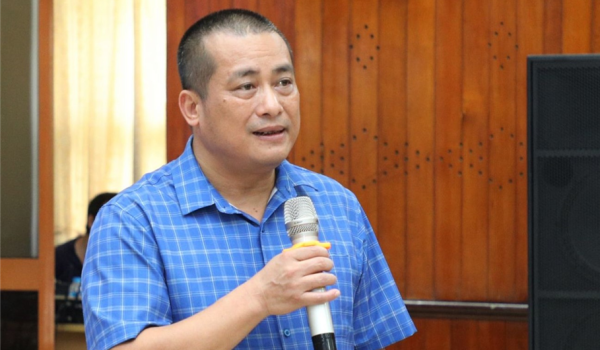
Nhà văn, nhà nghiên cứu Nguyễn Xuân Tuấn – tác giả cuốn sách “Con đường
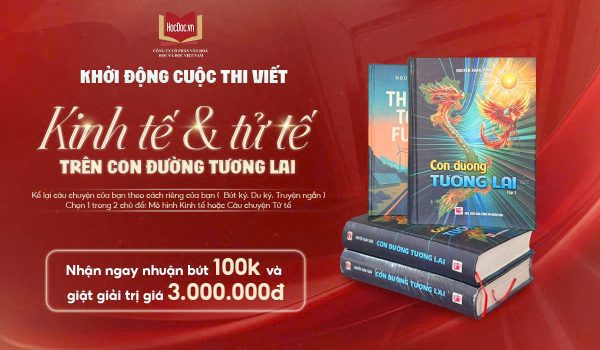
KHỞI ĐỘNG CUỘC THI VIẾT “KINH TẾ & TỬ TẾ TRÊN CON ĐƯỜNG TƯƠNG LAI” I. Thông
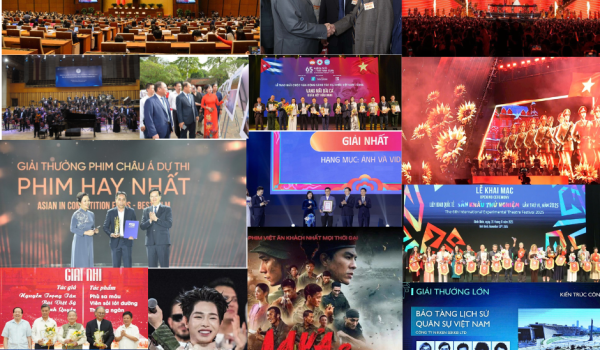
Cuộc thi “Đến với Con đường tương lai” dựa trên tác phẩm cùng tên của nhà
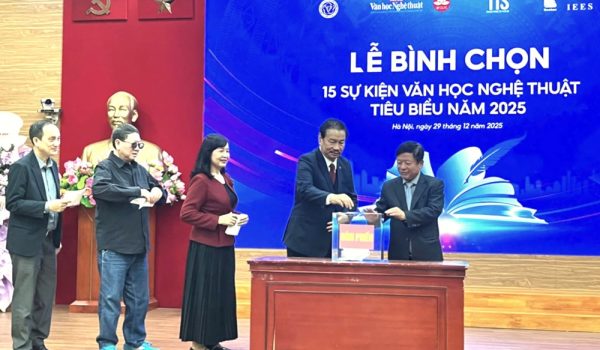
Chiều 29.12, tại Hà Nội đã diễn ra lễ bình chọn 15 sự kiện văn học nghệ thuật
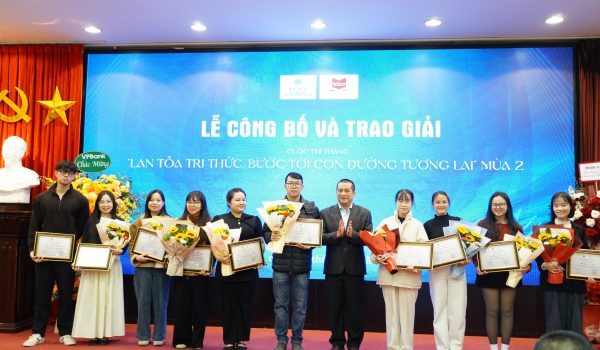
Ngày 27/12, tại Hà Nội, Viện Khoa học Giáo dục và Môi trường phối hợp với Sàn

Ngày 15/12, Hội Nhà văn Hà Nội tổ chức Hội nghị tổng kết công tác năm 2025,